Get a quote

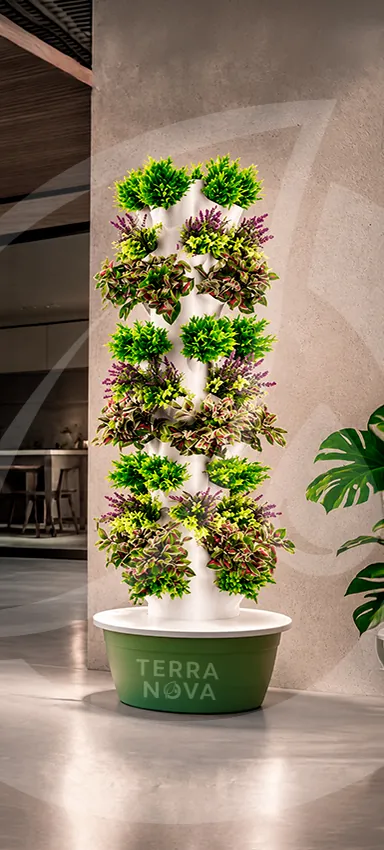
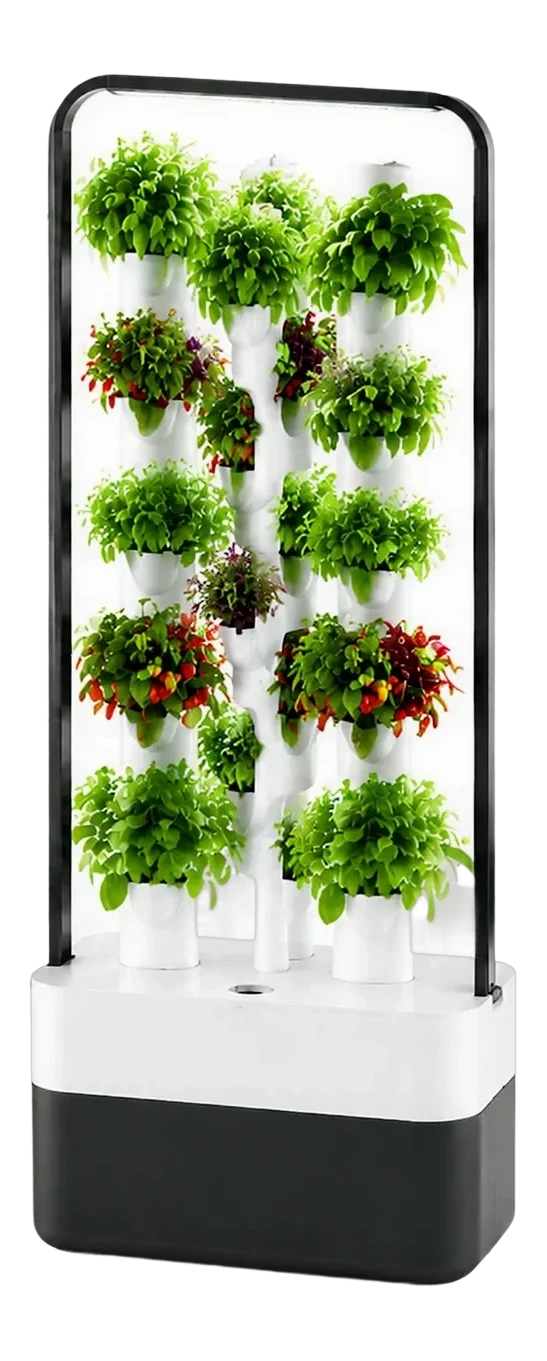

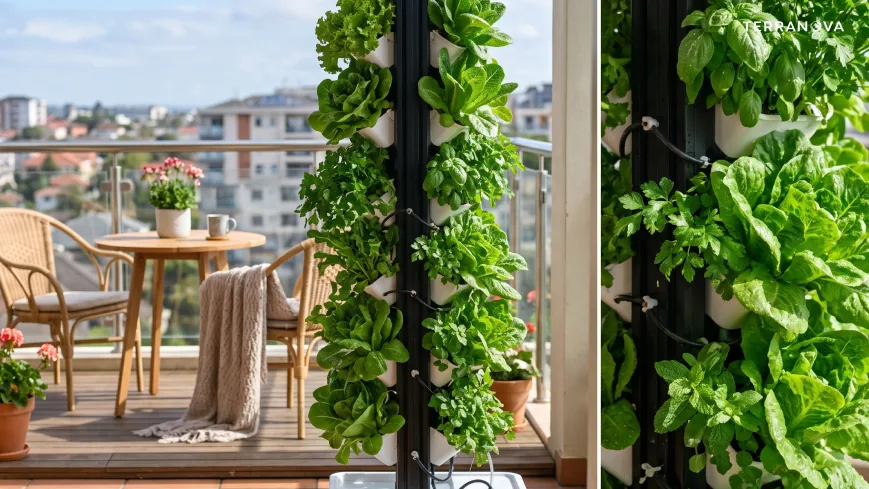
Eating fresh, healthy food free of chemicals matters more and more to families. But in the city there is no space, and in the countryside people are looking for self-sufficiency. Vertical hydroponics solves both: it lets you grow fresh food, without soil or pesticides, in practically any environment.
What is vertical hydroponics?
Hydroponics is a growing technique that uses no soil: plants grow fed by nutrient-rich water. In its vertical form, crops are arranged upwards, which makes it possible to produce in very little space. The result is a fresh, clean harvest with no need for pesticides.
0 % soil — clean growing, without the mess or the pests of the ground.
0 % pesticides — healthier, safer food.
100 % freshness — harvested on the spot, with all its flavor and nutrients.
Benefits: freshness, health and sustainability
A vertical hydroponic garden brings food production closer to where it is eaten. That means fresher vegetables, greater control over what we eat and more efficient use of water and space, in line with a sustainable lifestyle.
For the home (B2C)
At home — whether in the city, by the sea or in the countryside — a growing tower means fresh vegetables all year round, in little space and with low maintenance. It is the ideal option for families who value eating well and want to take a step towards food self-sufficiency.
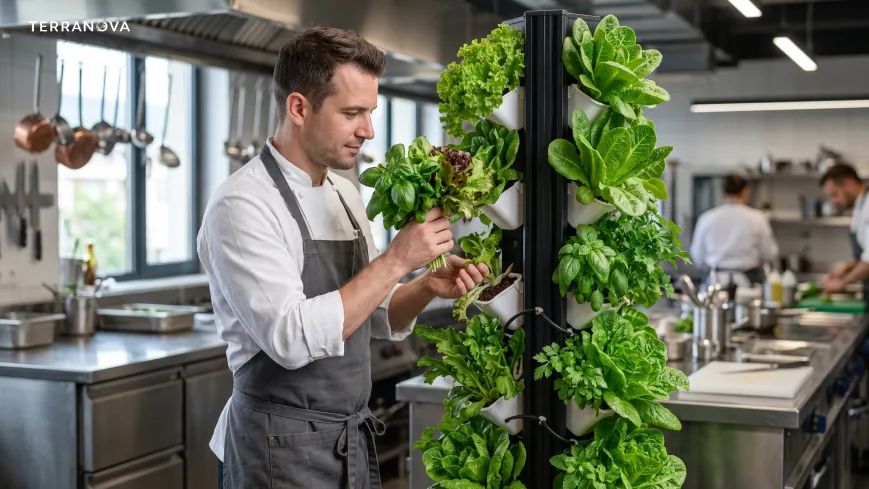
For restaurants, hotels and institutions (B2B)
In the professional world, vertical hydroponics offers restaurants and hotels (HORECA) fresh, traceable produce grown on their own premises. It also enables municipal projects and social programs — community and educational gardens — and even the production of fresh food at camps and remote operations.